Home › Reference

 US
US
1 of 1 storefronts
Content in en-US
Content in en-US
Information
Apple ID797540409
Bundle IDcom.zadapps.roqiah
SellerSeller
Min iOS7.0
Min macOS11.0
Device familiesiphone, ipod
Released2014-01-21
Copyright© 1435 ZadApp
Preview 1 platform
iPhone 5 images

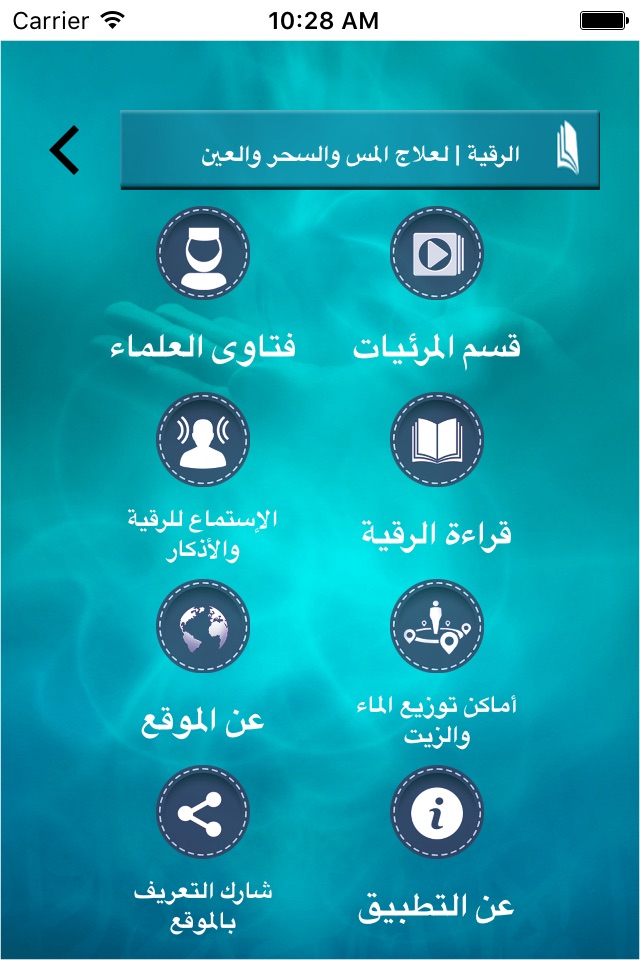
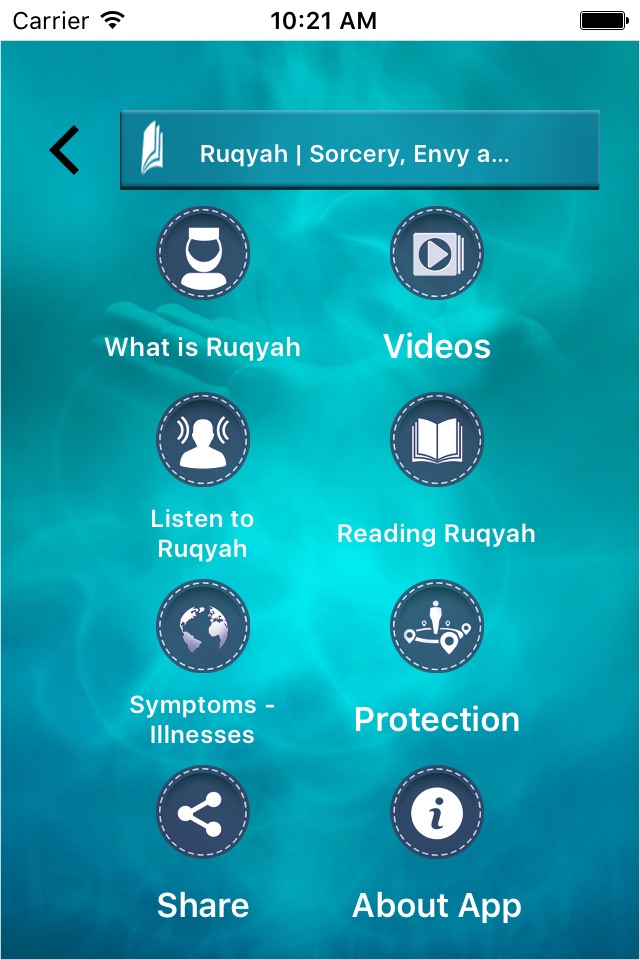


What’s New Version 1.1
Cette mise à jour d’Apple améliore le fonctionnement de l’app. Elle n’inclut pas de nouvelle fonctionnalité.
- تحديث الواجهة
Description
Ruqyah (plural: ruqa) derives from the past-tense verb raqa. It consists of words said or written in the form of dud or Dhikr for the purpose of protection or cure. It is sometimes accompanied with other actions, such as blowing or wiping over the thing ich it is applied.
A synonym for ruqyah in Arabic is "ta'with" and "ta'withah", from which derives the description "al-Mu'awwidhat" (the protecting ones) for the last three suras of the Qur'an, and "al-Mu'awwidhatan" (the two protecting ones) for the last two suras only (cited below).
People from most cultures and religions use various forms of ruqa. They are usually referred to in English as spells, charms, incantations, and so on. Most of those ruqa contain magic, shirk, senseless words, lies, etc. Because of this, the Prophet (Peace and Blessing upon Him) prohibited using ruqa at first. Ibn Masud (RA) reported that the Prophet (Peace and Blessing upon Him) said:
'Indeed, ruqa, amulets, and tiwala*, are all acts of shirk.' Recorded by Ahmad, Abu Dawud, and others. Verified to be authentic by al-Albani in as-Sahihah no. 331.
(*Tiwala: Beads or other objects, usually worn around the neck, believed by some people to have the power of making a husband love his wife.)
Later on, he (Peace and Blessing upon Him) allowed people to use only the ruqa that he approved, or that did not contain shirk. Jabir Bin 'Abdillah (RA) reported that Allah's Messenger (Peace and Blessing upon Him) prohibited ruqa. Then, some people from the tribe of 'Umr Bin Hazam came to him and said, "We have a ruqyah that we used to use for scorpion and snake stings; but you have now prohibited using ruqa." And they showed it to him. He (Peace and Blessing upon Him) said:
'I do not see anything wrong in it. Anyone among you who can benefit his brother should do so.' Muslim
Accessibility
ipadiphonemacrealityDevicetvoswatch
Version history 2 versions
Build 814721563v1.12015-12-12 21:19:18
Cette mise à jour d’Apple améliore le fonctionnement de l’app. Elle n’inclut pas de nouvelle fonctionnalité.
- تحديث الواجهة
Build 308412666v1.02014-01-20 23:27:37
No pricing data captured yet — comparisons appear once the app has paid storefronts or in-app purchases.
Availability 1 of 1 storefronts
| Region | Language | Price | Ratings | Avg | Version |
|---|---|---|---|---|---|
| US | en-US | Free | 0 | — | 1.1 |
Change log 5 changes · US
✎
releaseNotes updated
Cette mise à jour d’Apple améliore le fonctionnement de l’app. Elle n’inclut pas de nouvelle fonctionnalité.
- تحديث الواجهة
✎
description updated
Ruqyah (plural: ruqa) derives from the past-tense verb raqa. It consists of words said or written in the form of dud or Dhikr for the purpose of protection or c
✎
name updated
الرقية الشرعية
◆
Version 1.1 released
Cette mise à jour d’Apple améliore le fonctionnement de l’app. Elle n’inclut pas de nouvelle fonctionnalité.
- تحديث الواجهة
◆
Version 1.0 released